More than Memories: How Trauma is Passed Down Biologically and Psychologically
Written by: Anisha Shukla | Edited by: Angela Zhang

Image credit: Yatra Trauma Centre
Why do some fears seem to be inherited? Not taught, not explained, simply present. Maybe it's the way your parents respond immediately to stress or the way some things are always felt but never talked about. These patterns may seem typical or perhaps undetectable as a child.
However, researchers are now asking a deeper question: what if trauma persists beyond memory? What if it influences our bodies' reactions as well as our thoughts, patterns passed on throughout generations? Trauma is not a one-time occurrence; it can have long-lasting effects not just on an individual, but also on their future health (Delboy 2025).
Even before genetics is taken into account, trauma is frequently transmitted through routine encounters, including how people engage, communicate, and build connections. Children pick up on their guardians' reactions to the outside environment (Young et al., 2011). An unstable parent may become controlling, emotionally distant, or too watchful. Attachment styles and emotional controls can all be impacted by these patterns. Although families frequently attempt to protect their next generation, coping strategies may unintentionally become inherited habits.
The Biology of Trauma: More than Just a Feeling
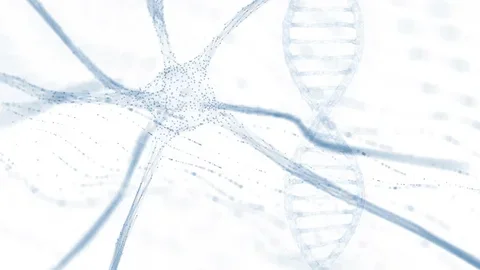
Image credit: Shutterstock
Not only does trauma affect behavior, but it can also leave physical scars that last for generations. The Hypothalamic-Pituitary-Adrenal (HPA) axis— a person's stress-response mechanism— is triggered when they are under prolonged or extreme stress, releasing cortisol, the body's primary stress hormone. The HPA axis becomes dysregulated in traumatic situations, resulting in excessive or insufficient cortisol production, which impacts mood, energy levels, and immune system performance (Kuhlman et al., 2015).
Beyond these immediate effects, epigenetic research demonstrates that trauma can affect gene expression without altering the underlying DNA sequence (Oren et al., 2025). For example, stress-related genes can be "turned on" or "turned off" by chemical changes like DNA methylation. Some of these epigenetic marks persist in sperm and egg cells, persisting to the next generation. According to some research, these alterations might even manifest in the following generation. Studies on populations exposed to starvation have revealed epigenetic alterations associated with metabolism and long-term health, and research on descendants of Holocaust survivors has revealed changed stress hormone levels (Wu et al., 2017) (Rodriguez, 2015). These findings imply that events can leave biological traces that last beyond one lifetime, even though trauma is not generally perceived as a heritable trait. Children can also be indirectly impacted by parental trauma; a child's developing stress-response system can be shaped by prenatal stress from the mother or maternal cortisol levels, which can have both biological and psychological impacts. Rather than altering your DNA sequence, epigenetics modifies the way genes are activated or deactivated (Psychology Today, n.d.). Genes involved in stress control may be impacted by chemical changes brought on by trauma, such as DNA methylation.
Why This Matters for Healthcare
Understanding that trauma is both biological and psychological transforms the way we approach medicine. Patients carry histories, circumstances, and generational experiences that influence their health with them when they enter clinics. Anxiety, depression, heart disease, immune system problems, and persistent inflammation have all been connected to trauma (Sumner 2023). Without a trauma-informed approach, these disorders could be handled superficially. Healthcare professionals can better comprehend patient behaviors, prevent retraumatization in clinical settings, and more successfully integrate mental and physical care when they take intergenerational trauma into account. In communities impacted by systemic stressors like migration, discrimination, or socioeconomic instability, this mindset is especially crucial.
Breaking the Cycle
If trauma can be passed down, so can healing. The first step is awareness. Individuals and families can begin to change these patterns by recognizing how trauma shows up, whether in their bodies or in their behaviors and emotions. Fostering a safe environment, a culture that encourages therapy, and forming supportive connections are all examples of protective factors (Diamond, 2013). These actions can positively impact future generations in addition to improving the well-being of the individual in particular. Trauma may be powerful and its ramifications long-lasting, but it is not permanent, and it is not destiny. We get closer to a comprehensive understanding of health when we prioritize an empathic, context-driven, and prevention-focused approach in examining trauma from both a biological and psychological perspective.
As students, aspiring medical professionals, and members of the community, we can help change the way that trauma is seen. Spend some time learning about trauma-informed treatment, approach patients and individuals with curiosity, and acknowledge that many behaviors have deeper roots. We are able to respond to trauma with the care it needs only when we recognize that it can be carried across generations, not just experienced in a single moment. In doing so, we don’t just treat individuals; we help change what gets passed on.
Bibliography
Delboy, Santiago. 2025. “Trauma Is an Experience, Not an Event | Psychology Today.” Www.psychologytoday.com. March 31. https://www.psychologytoday.com/us/blog/relationships-healing-relationships/202308/trauma-is-an-experience-not-an-event.
Diamond, Adele. 2013. “Executive Functions.” Annual Review of Psychology 64 (1): 135–68. doi:https://doi.org/10.1146/annurev-psych-113011-143750.
Kuhlman, Kate Ryan, Ivan Vargas, Elisa G. Geiss, and Nestor L. Lopez-Duran. 2015. “Age of Trauma Onset and HPA Axis Dysregulation among Trauma-Exposed Youth.” Journal of Traumatic Stress 28 (6): 572–79. doi:https://doi.org/10.1002/jts.22054.
Link to external site, this link will open in a new window. 2023. “Psychological and Biological Mechanisms Linking Trauma with Cardiovascular Disease Risk.” ProQuest 13 (25): 25. doi:https://doi.org/10.1038/s41398-023-02330-8.
Oren, Guy, Anat Shoshani, Nadra Nasser Samra, Willem JMI Verbeke, Pascal Vrticka, Daniela Aisnberg-Shafran, and Tsachi Ein-Dor. 2025. “From Trauma to Resilience: Psychological and Epigenetic Adaptations in the Third Generation of Holocaust Survivors.” Scientific Reports 15 (1). Springer Science and Business Media LLC. doi:https://doi.org/10.1038/s41598-025-12085-5.
Psychology Today Staff. 2019. “Epigenetics.” Psychology Today. https://www.psychologytoday.com/us/basics/epigenetics.
Rodriguez, Tori. 2015. “Descendants of Holocaust Survivors Have Altered Stress Hormones.” Scientific American Mind 26 (2): 10–10. doi:https://doi.org/10.1038/scientificamericanmind0315-10a.
Wu, Lei, Xueqin Feng, Axin He, Yi Ding, Xiuwen Zhou, and Zhice Xu. 2017. “Prenatal Exposure to the Great Chinese Famine and Mid-Age Hypertension.” PloS One 12 (5). United States: e0176413. doi:https://doi.org/10.1371/journal.pone.0176413.
Young, Robert, Susan Lennie, and Helen Minnis. 2011. “Children’s Perceptions of Parental Emotional Neglect and Control and Psychopathology.” Journal of Child Psychology and Psychiatry 52 (8): 889–97. doi:https://doi.org/10.1111/j.1469-7610.2011.02390.x.
