
GLP-1’s: How Do They Really Work?
Written by: Kaveri Gupta | Edited by: Angela Zhang
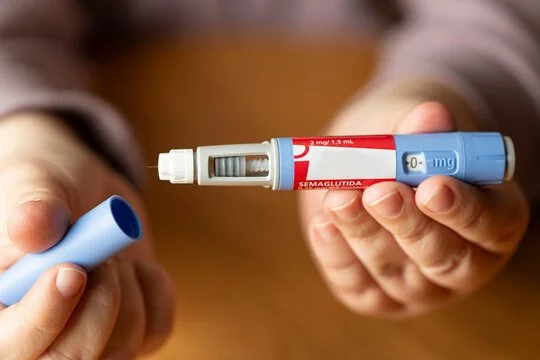
Credit: Adobe Stock
Semaglutide, more commonly known as Ozempic, has recently surged in popularity, especially as more people turn to it for weight loss. But what is it actually doing in the body, and what are the tradeoffs?
The Federal Drug Administration initially approved semaglutide in 2017 to treat high blood glucose in patients with Type II diabetes, a condition when the body’s cells become resistant to insulin and inadequately uptake glucose from the blood, leading to chronically elevated blood sugar that can damage the heart, kidneys, and nerves (Rosen and Ingelfinger). Insulin acts as a key that unlocks cells’ ability to absorb glucose from the bloodstream to be used for energy. However, during the STEP 1 clinical trials, researchers found it also reduced 14.9% of body weight over 68 weeks (Ingelfinger and Rosen); as a result, semaglutide can now be prescribed for nondiabetic patients who are overweight or obese. Semaglutide is offered under multiple brand names, including the orally administered Rybelsus and the subcutaneous injections Ozempic and Wegovy. While Wegovy is FDA-approved specifically for chronic weight management, Ozempic is frequently prescribed off-label—when a physician prescribes a drug for a different purpose than what is officially listed on its FDA-approved label—for weight loss (Stafford).
Semaglutide’s popularity has surged because of its combination of glucose-lowering and weight-loss effects, sometimes even in absence of medical necessity. This popularity surge has been fueled by pop culture; Ozempic, for one, has become a topic of Hollywood discourse, with high-profile celebrities touting its effects as a “miracle” for rapid aesthetic weight loss (Barbaro et al.). This cultural obsession is leading to global supply shortages and sparking a debate over the ethics of using limited pharmaceutical resources for cosmetics rather than medical necessity.
Semaglutide is considered a “GLP-1 agonist”, but what exactly does this mean? GLP-1 (glucagon-like peptide-1) and GIP (gastric inhibitory polypeptide) are natural incretin hormones, meaning they are produced in the gastrointestinal tract after eating and stimulate insulin secretion from the pancreas. Semaglutide in particular mimics naturally occurring GLP-1—hence GLP-1 agonist—and binds to GLP-1 receptors on pancreatic β-cells, gastrointestinal tract neurons, and in other metabolic tissues, resulting in four main physiological effects: insulin secretion, glucagon inhibition, delayed gastric emptying, and reduced hunger signaling (Rosen and Ingelfinger).
Two of semaglutide’s four primary physiological effects pertain to reducing blood glucose levels. First, by mimicking GLP-1, a hormone that normally binds to GLP-1 receptors in pancreatic β-cells, semaglutide stimulates insulin secretion in high blood glucose conditions, helping compensate for insulin resistance. Second, since GLP-1 suppresses pancreatic α-cells, semaglutide inhibits those cells, which secrete glucagon. Glucagon functions as the opposite of insulin, signaling the liver to release stored sugar into the blood when levels are too low. Paired with increased insulin secretion from pancreatic β-cells, decreasing glucagon secretion helps lower blood glucose even further for Type II diabetics.
Semaglutide’s remaining two primary physiological effects pertain to weight loss, driving much of its recent attention. Firstly, by delaying gastric emptying, semaglutide slows the movement of food from the stomach to the small intestine, again as an effect of GLP-1 receptor activation, which negatively regulates gastrointestinal smooth muscle activation. Food remains in the gastrointestinal tract longer, leading to prolonged distension and thus increased satiety signals to the brain; mechanistically, this contributes to weight loss by reducing caloric intake. Semaglutide’s fourth primary effect is distinguishable from the first three in that it acts on the hypothalamus rather than a component of the digestive tract. GLP-1 receptors in the hypothalamus reduce hunger signaling, so when semaglutide binds to these receptors, it represses appetite in absentia of actual food intake.
However, these effects come with significant side effects that are often overlooked. These can include nausea, vomiting, abdominal discomfort, diarrhea, hypoglycemia, cholelithiasis, and pancreatitis, with the latter being rare but documented (Cleveland Clinic). More specifically, the common symptom of nausea occurs as a byproduct of increased stomach distention from delayed gastric emptying, which activates vagal pathways that trigger nausea centers (Rosen and Ingelfinger).
Before starting semaglutide, it is also crucial to know that stopping treatment reverses its physiological improvements. In other words, continuous GLP-1 activation is necessary for sustained weight loss; the STEP 4 clinical trials show that after stopping semaglutide treatment, the placebo group regained 7% of their body weight in twenty weeks, whereas the continued semaglutide group lost an additional 8% of their body weight (Rubino et al.). This raises important questions about how sustainable this approach really is, as this suggests that once started, semaglutide treatment must be permanent. This lifelong treatment requirement introduces financial burden as well, for semaglutide primarily comes in injection form (more expensive to manufacture than oral drugs), resulting in out-of-pocket expenses exceeding $1,000 per month (Barbaro et al.). Furthermore, there are physiological concerns regarding long-term use, for when used by lower-weight individuals, it can lead to more loss of lean muscle mass rather than just fat, potentially compromising overall metabolic health (Rubino et al.).
Ultimately, semaglutide holds immense promise in treating both Type II diabetes and obesity, but its use is accompanied by notable side effects and limitations. Rather than viewing it as a one-stop solution, it is important to also prioritize more sustainable, long-term strategies for weight management. By regularly exercising, patients can get their skeletal muscles to naturally absorb glucose from blood, improving metabolic health without any pharmaceutical support.

Image credit: Andrea D'Aquino for The New York Times; Photographs by Getty Images
Bibliography
Barbaro, Michael, et al. “The Ozempic Era of Weight Loss.” The New York Times, 18 Sept. 2023, https://www.nytimes.com/2023/09/18/podcasts/the-daily/ozempic-weight-loss.html?
“GLP-1 Agonists Are a Class of Medications That Can Help Manage Type 2 Diabetes and Obesity. They’re Often Injection Medications..” Cleveland Clinic, 5 Sept. 2023, https://my.clevelandclinic.org/health/treatments/13901-glp-1-agonists#overview. Accessed 19 Apr. 2026.
Ingelfinger, Julie R., and Clifford J. Rosen. “STEP 1 for Effective Weight Control — Another First Step?” New England Journal of Medicine, vol. 384, no. 11, Massachusetts Medical Society, Mar. 2021, pp. 1066–67, https://doi.org/10.1056/nejme2101705. Accessed 19 Apr. 2026.
Rosen, Clifford J., and Julie R. Ingelfinger. “GLP-1 Receptor Agonists.” New England Journal of Medicine, vol. 394, no. 13, Massachusetts Medical Society, Apr. 2026, pp. 1313–24, https://doi.org/10.1056/nejmra2500106. Accessed 19 Apr. 2026.
Rubino, Domenica, et al. “Effect of Continued Weekly Subcutaneous Semaglutide vs Placebo on Weight Loss Maintenance in Adults With Overweight or Obesity.” JAMA, vol. 325, no. 14, American Medical Association (AMA), Apr. 2021, p. 1414, https://doi.org/10.1001/jama.2021.3224. Accessed 19 Apr. 2026.
Stafford, Randall S. “Regulating Off-Label Drug Use — Rethinking the Role of the FDA.” New England Journal of Medicine, vol. 358, no. 14, Massachusetts Medical Society, Apr. 2008, pp. 1427–29, https://doi.org/10.1056/nejmp0802107. Accessed 19 Apr. 2026.
