
Editing Humanity: Where Should We Draw the Line on CRISPR?
Written by: Vaishali Jha | Edited by: Angela Zhang
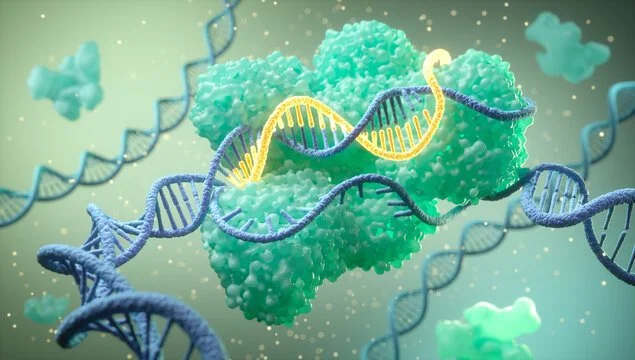
Image credit: Adobe Stock
What if we could edit human life before it even begins? When I started learning about CRISPR gene editing last summer in MCB N184, Intro to CRISPR: From Basic Biology to Genome Editing Technology, I was excited to learn about the latest breakthroughs in medicine. However, the class only deepened my ethical doubts. Initially, CRISPR seemed like one of the greatest achievements in modern science. Yet the more I learned, the more apparent its ethical qualms became. In my opinion, CRISPR is both a tremendous scientific discovery and a challenge to the moral principles of humanity.
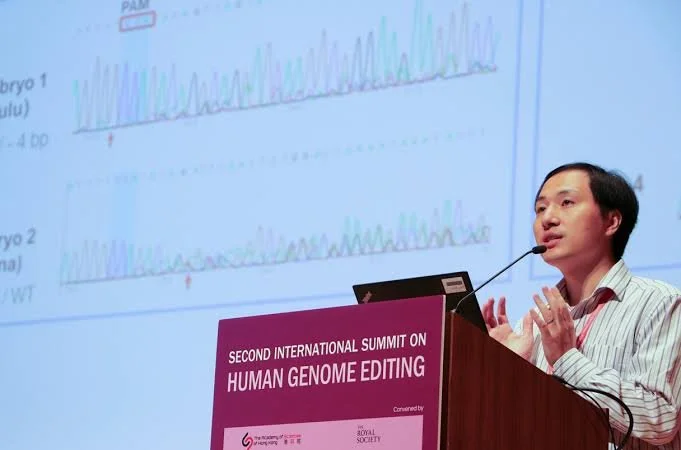
Image credit: National Academies/Flickr
In 2018, Chinese scientist He Jiankui reported that he had created the world's first genetically modified human babies (Cyranoski, 2019). The purpose of his experiment was to make those children immune to HIV infection, but it faced widespread criticism for its unethical and scientifically irresponsible nature. CRISPR technology can help modify the genes of organisms to prevent various genetic disorders. On the molecular level, specifically designed RNA “guides” direct the Cas enzyme to cut the DNA molecule at a desired place In principle, CRISPR technology could be used to eliminate mutations responsible for diseases such as cystic fibrosis and sickle cell anemia.
However, CRISPR technology poses several hazards. For instance, off-target modification takes place when the Cas protein cuts to other areas of the DNA by failing to perfectly match the guide RNA. In such cases, the result might be an introduction of a mutation rather than correcting it. Moreover, once the DNA is cut, the processes of cell repair, including NHEJ, which is an error-prone repair mechanism that directly ligates broken DNA ends without using a template, could also further introduce mutations. According to scientific research carried out on human embryos, both desirable and undesired edits can happen at the same time (Liang et al., 2015). Since these aspects have not been sufficiently studied and are hard to predict and control, they remain an obstacle in using CRISPR safely.
Another essential matter is consent. Unlike situations in which CRISPR is applied for therapeutic purposes in somatic cells since the patient in this case can give consent and receive the benefits from the therapy, in the process of germline editing, the person affected has no opportunity to provide consent, even though the changes may directly affect their future life and health. The issue under discussion leads to the ethical question: Can we make such decisions for another person without his or her consent?
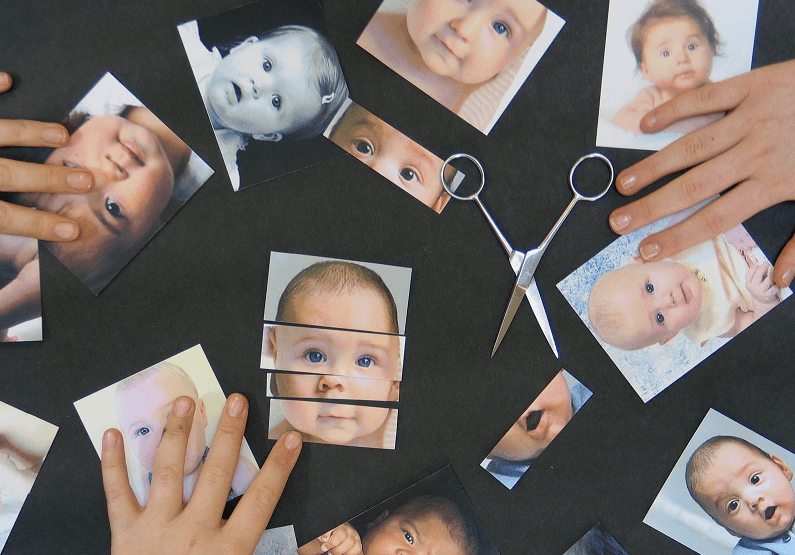
Image credit: Science Literacy Project
Furthermore, there is the potential of utilizing CRISPR technology to enhance human beings or create designer babies, modifying genes in order to improve certain features like intelligence, physical abilities, or even beauty. Selecting for qualities considered “desirable” raises the question of who gets to define a “desirable” trait, which further brings in the historical context of eugenics. Eugenics refers to the deliberate effort to influence the genetic composition of a population by favoring certain inherited traits over others. As a consequence, any effort to apply gene editing to enhance humans might attract negative attention because of its similarity with eugenics. Genetic enhancement may worsen the current social disparities if only rich individuals have access to this technique, and thus, biological features like intelligence and physical abilities develop into economic classes (National Academies of Sciences, 2017).
CRISPR poses an extremely complicated challenge to us: while the opportunity of preventing diseases through gene modification seems quite appealing, as with all new technologies, it brings with it a slew of novel ethical concerns. It forces us to ask not just what we can change about human life, but what we should choose to change—and who gets to decide.
Bibliography
Cyranoski, David. “CRISPR-baby scientist fails to satisfy critics.” Nature, 2019.
Frangoul, Haydar, et al. “CRISPR-Cas9 Gene Editing for Sickle Cell Disease.” New England Journal of Medicine, 2021.
Liang, Puping, et al. “CRISPR/Cas9-mediated gene editing in human embryos.” Protein & Cell, 2015.
National Academies of Sciences. Human Genome Editing: Science, Ethics, and Governance. 2017.
