
My Nobel Laureate Lab Experience
Written by: Theo Chen | Edited by: Angela Zhang
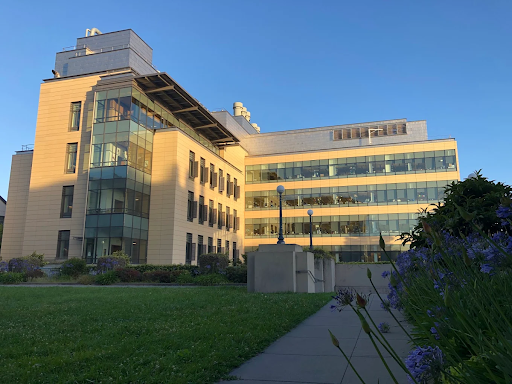
Image credit: Erik Wilde
My name is Theo Chen, and I am an undergraduate in the class of 2026. Professor Schekman, or Randy (as he prefers), is my Principal Investigator. I joined the Schekman Lab in my sophomore year on a whim, and I’ve regretted the long hours, delighted in the fruitful results, and worried over the presentations in lab meetings. However, no matter the experience, I can safely say that my time in the lab is my most meaningful experience of my college career.
The Schekman lab is located in the Li Ka Shing Center, a beautiful building on the northwestern corner of campus, overlooking the Crescent lawn. It’s a sight to behold at sunset. The lab currently focuses on membrane biology, with an emphasis on intercellular communication via cargo transfer and other mechanisms of cell fusion.
At first, I didn’t know Randy was a Nobel Laureate. I had coincidentally taken a freshman seminar on neurodegenerative diseases with him, meeting once a week to discuss different neurodegenerative diseases. Concluding the class with a debate, Randy was impressed by my critical thinking on the legalization of euthanasia for dementia-facing patients. With an invitation to check out his lab for research, I initially shrugged at the opportunity. It wasn’t until I had started cold emailing that I realized the difficulty of finding research. While researching different labs, I had only realized that he was a Nobel Laureate when I stumbled upon his page in the MCB department research catalog. I was lucky enough to be still remembered by Randy, and later joined the lab in my sophomore year.
If you thought that this story was to boast my luck—which I have to acknowledge I did have—keep reading. It wasn’t all beautiful sunsets and candid views of student life at Brown’s. For the most part, I missed the sunsets, and as the skies dimmed, I watched slowly as the people sitting at the outdoor patio disappeared. Wet lab research as an undergraduate is hard work, and if you’re ready to take it on, I’m confident this guide will help you get your publication, stellar letter of recommendation, and, most importantly, learn something valuable from this special opportunity.
Wet lab research is glamorized by pre-meds as an exciting investigation of the undiscovered and a core pillar of the medical school application. It’s thought that by joining a lab, you will automatically succeed. No one tells you about the nitty-gritty points that really contribute to your success in the lab. In this blog, I’ll be talking about tips for getting into a great lab, things to consider, tips I wish I knew, and, most importantly, how to succeed in research as a pre-med student.
Getting into a Lab: Quality over Quantity
As lucky as I was, it would be unfair to say I didn’t put meticulous planning into finding the right lab for me. I had sent 40+ “cold” emails—but only to 7 labs. While sending emails is important, sending emails of quality is something I cannot emphasize more. It’s very clear when emails are copied and pasted, and so I offer a solution: do your research about the research. I sent an average of 6 emails to associates in the same lab, targeting PhD (graduate) students and postdoctoral fellows instead of directly to the Principal Investigator (PI). Oftentimes, PIs will not have time to answer or will redirect your email anyway. In addition, asking to chat over video call with graduate students or post-doctorate fellows can answer questions you have about the research. This way, you can organize all the insights you’ve collected from chatting with doctoral students and postdocs into a formal pitch for yourself in a lab. The email won’t be cold, it’ll be lukewarm.
If you’ve been thorough in applying these techniques and the lab search is still unsuccessful, oftentimes it will be attributed to there not being any open availability. However, a lack of availability in a few labs does not mean there’s no space out there for you at all. Reach out to upperclassmen to inquire about their labs’ availability, and reaching out towards the end of the semester is optimal. Don’t feel discouraged.
Three Equally Important Reasons for Choosing the Right Lab
Of course, interest should be your number one reason! Choose the lab that interests you, not the one you think you should join. At the end of the day, medical schools are not here to judge your research topic, and know that you don’t have control over your lab’s research focus. The AAMC (American Association of Medical Colleges) itself states that research does not have to be wet lab research and that applicants are successful with various research experiences, so don’t worry about choosing the more clinically relevant research. Each medical school is different, but what they share is that they are interested in learning what you have done and what you have learned. Choose one that works for you, one where you are eager to learn.
A very close second is proximity and all things logistical. How far is the commute, especially if the lab is off-campus? What will you do during that commuting time? A lot of students prefer labs at UCSF due to the higher chance of tissue histology and translational research to boost their interest in medicine. I myself faced a similar dilemma when choosing between labs. However, I ultimately decided on the Schekman lab, determining that proximity was an important factor for me. Labs don’t have to be fixed shifts of five hours on Tuesdays and Thursdays. This may be something you work out with your mentor(s) in the lab, but ramping up towards senior year and potentially writing a research thesis, independent projects require your proactivity and dedicated attention. Some days, you may need to go in to check cells at 8 am or stop the ultracentrifuge at 10 pm. The expectations for your research project can be made clear with your mentor, but if the lab is located nearby, you are more able to take on this responsibility yourself, leaving a strong impression of dependability.
The third reason, no less important than the first two, is the pace and progress of your project. In more cases than not, as you join a lab, you will be working under a mentor who teaches you the techniques. You’ll typically be working on a sub-project related to your mentor’s work and will have your name eventually authored on their research paper. As a pre-medical student, publications are a testament to your time and contributions to the lab. Where your research mentor stands in their project will largely determine if you have that publication as well. Thus, when speaking with graduate students and post-doctorates, ask about their project and what year in their program they are in! Graduate student terms usually take 5.5 to 6 years to complete, and post-doctorate fellows have contracts and funding that may vary between 2 and 5 years. In general, life science professionals typically stay for around 4-5 years due to these same publication timelines. To strategically choose a lab that will bear fruitful publications throughout your college career, I recommend finding a mentor who will be publishing soon.
Being the Perfect Mentee
This section is about how to succeed in any lab. In my college career, I have worked in 4 labs: an entomology lab through URAP my freshman year, a neurodegenerative disease lab my junior year abroad, a cancer lab working with mice my junior summer, and the Schekman lab since my sophomore fall. With all these different experiences, what I have gathered is not only how crucial your mentor is, but what you can do to make the most of each situation, regardless of your mentorship.
Be proactive in asking questions after taking the time to individually research them first. Most of the time, your mentor is busy with their own projects, so you should first attempt to find a solution to your question before asking questions. I find that generative AI is good for explaining conceptual reasons for specific experiments, like a Western Blot or dilutions. To understand the scope of your papers, I’d suggest reading past papers published in the lab that may be related.
Be prepared by planning experiments before starting them. This will save you time, help you prepare, and solidify your understanding of how the experimental technique works and why you are doing the experiment. Keeping a lab book or electronic document of your days in the lab and experiments conducted will help you organize your content for the end-of-semester presentations and understand your research.
Demonstrate your mastery by presenting at journal clubs. You can do this by offering to present the JC in your mentor’s stead. Journal club presentations entail analyzing and presenting a research paper, its findings, strengths, and weaknesses. As daunting as this sounds, you can work together with your mentor for the first one! Just the effort shows an intellectual curiosity and the courage to learn. If your lab doesn’t have journal clubs, have a conversation with your mentor about articles you can review and personalized tasks that you can accomplish to show your willingness to learn.
I’ve gained a lot from my time at the bench. I’ve learned to hold myself accountable for mistakes that cost three days' worth of time, taking meticulous notes on very technical experiments, and conducting myself in an independent manner. These skills translate over to medical school, too! The AAMC website provides a detailed list with descriptions of “core competencies” that are well sought after in pre-med students. The skills you hone in the lab match this perfectly. Think about it as practice to become a better future physician as well.
Looking back at this all, what I’ve realized most of all is that even in a lab with a famous PI, learning is self-directed. There are no shortcuts to dedicating yourself, but you can work smarter, and I hope this blog helps you get there.
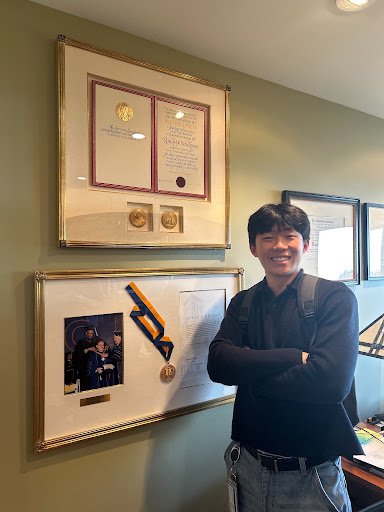
Image credit: Theo Chen
